

Everything You Need to Know About Kite Cut Diamonds: Price, Settings & Buying Guide

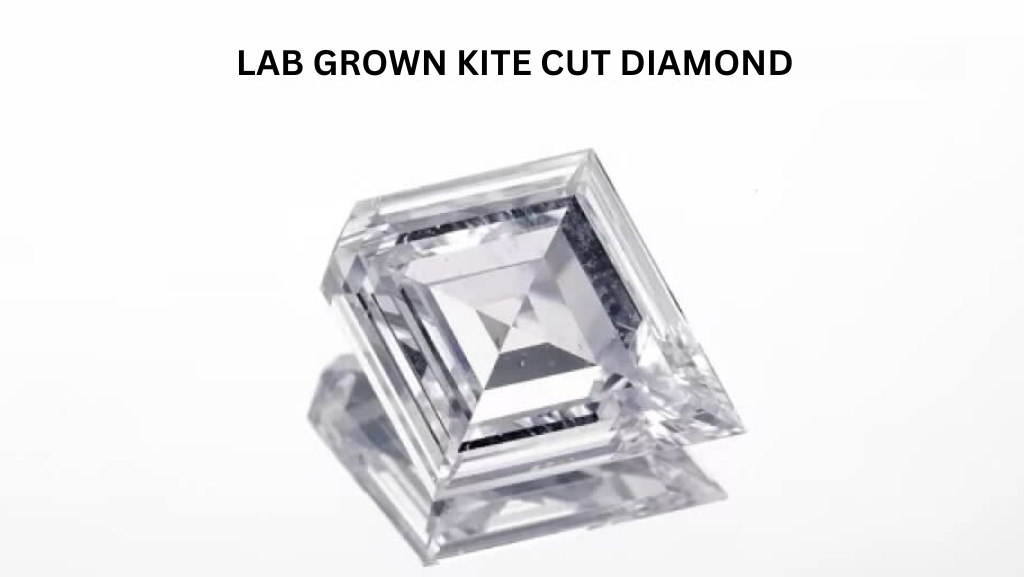
The kite shaped diamond is traditionally renowned because of its prolonged and angular structure. Without question, the dark hue of this form has caught the attention of many since the stone appears to be stunning and unique.
The shape, size and colors, everything is so glorious that the kite cut diamond is undoubtedly magnificent. It features a striking and distinctive aesthetic that highlights its notable and original shape.
What Does a Kite Cut Diamond Look Like?
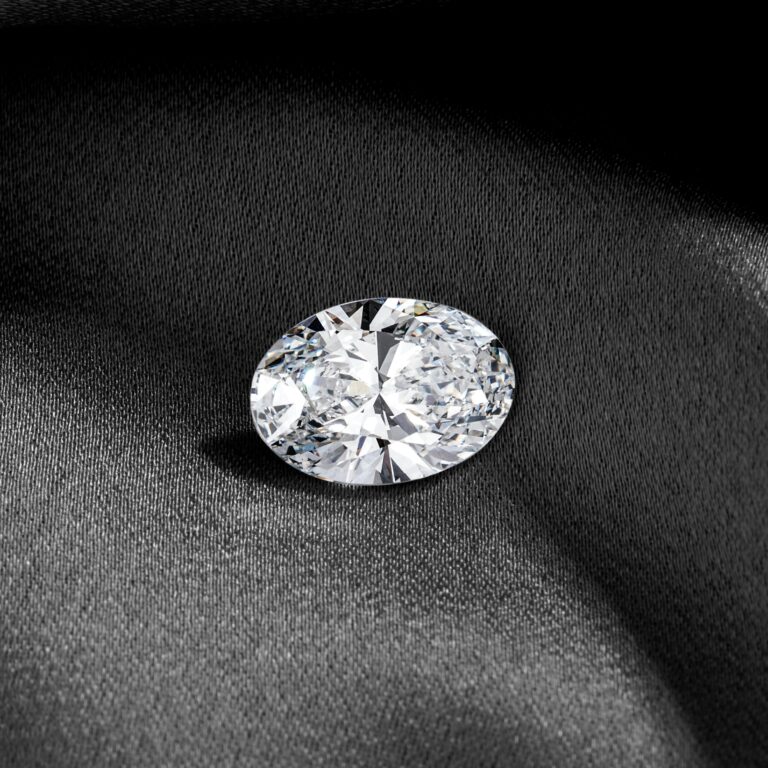
A kite cut diamond is one of the most distinctive and artistic diamond shapes available today. Named after its resemblance to a traditional kite, this diamond features an elongated geometric silhouette with pointed corners and angular lines that immediately capture attention.
Unlike traditional round or princess cut diamonds, a kite cut diamond offers a bold and unconventional appearance. Its unique shape combines the brilliance of modern faceting with the elegance of geometric design, making it a favorite among jewelry lovers seeking something truly different.
The kite shape can feature either brilliant-cut facets for enhanced sparkle or step-cut facets for a more sophisticated, hall-of-mirrors effect. Depending on the design, a kite cut diamond may appear modern, vintage-inspired, minimalist, or Art Deco.
Because of its striking profile, a kite cut diamond is often used as a center stone in engagement rings, as side stones in custom ring settings, or as decorative elements in earrings and pendants.
The History of Kite Cut Diamonds
Although kite cut diamonds have become increasingly popular in recent years, their origins can be traced back to the Art Deco movement of the 1920s and 1930s.
During this era, jewelry designers embraced geometric shapes, bold symmetry, and architectural influences. The kite shape perfectly embodied these artistic principles, offering a fresh alternative to traditional diamond cuts.
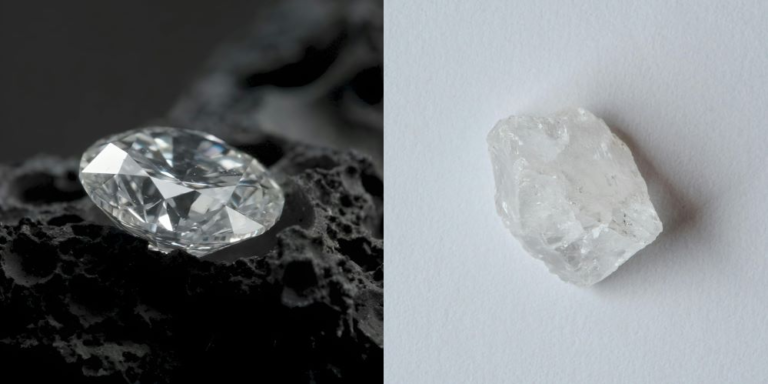
Today, the popularity of kite cut diamonds has grown significantly due to the rising demand for unique engagement rings and custom jewelry designs. Modern cutting technology and lab grown diamond production have made this rare shape more accessible than ever before.
A lab grown kite cut diamond allows buyers to enjoy this extraordinary shape while benefiting from ethical sourcing, sustainability, and exceptional value.
Kite Shape Diamond Characteristics
Several characteristics make kite cut diamonds stand out from other fancy-shaped diamonds:
Distinctive Geometric Shape
The most recognizable feature of a kite cut diamond is its elongated diamond-like silhouette with pointed ends and angular sides.
Unique Faceting Pattern
Kite cut diamonds can feature either brilliant-cut facets or step-cut facets depending on the desired appearance.
Larger Face-Up Appearance
Because of their elongated proportions, kite cut diamonds often appear larger than other diamond shapes of the same carat weight.
Excellent Design Flexibility
Jewelry designers frequently use kite cut diamonds in custom settings due to their versatility and ability to create unique visual patterns.
Modern Yet Timeless Appeal
The shape perfectly balances contemporary aesthetics with vintage Art Deco influences.
Pros and Cons of Kite Cut Diamonds
Before purchasing a kite cut diamond, it is important to understand both its advantages and limitations.
Advantages
- Unique and eye-catching appearance
- Excellent for custom jewelry designs
- Appears larger than many traditional cuts
- Perfect for Art Deco-inspired jewelry
- Works beautifully as both center and accent stones
- Available in both natural and lab grown options
Disadvantages
- Less brilliance than round brilliant diamonds
- Sharp corners require protective settings
- More difficult to find than common diamond shapes
- May require specialized craftsmanship for setting
Why Choose a Lab Grown Kite Cut Diamond?
Lab grown kite cut diamonds combine exceptional beauty with modern sustainability.
Chemically, physically, and optically identical to mined diamonds, lab grown diamonds offer the same brilliance and durability while reducing environmental impact.
Benefits of choosing a lab grown kite cut diamond include:
- More affordable pricing
- Ethical sourcing
- Environmentally responsible production
- Wider availability of sizes and qualities
- Greater customization opportunities
For buyers seeking a rare diamond shape without paying premium natural diamond prices, a lab grown kite cut diamond is often the ideal choice.
Kite Cut Diamond Price Guide
The price of a kite cut diamond depends on several factors, including:
- Carat weight
- Cut quality
- Color grade
- Clarity grade
- Diamond origin
- Setting style
Generally, lab grown kite cut diamonds are significantly more affordable than natural diamonds of comparable quality.
Many buyers can save between 40% and 80% while receiving a diamond that possesses the same physical and chemical properties as a mined diamond.
Custom-designed kite cut engagement rings may vary widely in price depending on the center stone size, metal choice, and additional accent diamonds.
When comparing options, focus on overall beauty and craftsmanship rather than price alone.
Clarity of Kite Shape Diamonds

Clarity plays an important role in the overall appearance of any diamond, including kite cut diamonds.
The Gemological Institute of America (GIA) grades diamond clarity based on the visibility of internal inclusions and external blemishes.
Common clarity grades include:
FL (Flawless)
No visible inclusions or blemishes under 10x magnification.
VVS1-VVS2
Very, very slight inclusions that are extremely difficult to detect.
VS1-VS2
Very slight inclusions that remain invisible to the naked eye in most cases.
SI1-SI2
Slightly included diamonds that may offer excellent value if inclusions are not visible without magnification.
For most buyers, VS1, VS2, and SI1 clarity grades provide the best balance between appearance and value.
Should You Buy a Kite Shaped Diamond?
If you’re looking for a diamond that stands apart from traditional shapes, a kite cut diamond may be the perfect choice.
Unlike round, oval, or princess cut diamonds that are commonly seen in jewelry stores, kite cut diamonds offer a distinctive geometric appearance that immediately draws attention. Their elongated silhouette and pointed corners create a sophisticated look that feels both contemporary and artistic.
A kite cut diamond is ideal for buyers who:
- Want a unique engagement ring
- Appreciate Art Deco and geometric designs
- Enjoy custom-made jewelry
- Prefer uncommon diamond shapes
- Want a center stone that appears larger than its carat weight
While kite cut diamonds are less traditional, their individuality is exactly what makes them so appealing. Whether used as a center stone or as part of a custom arrangement, they create jewelry pieces that feel truly one of a kind.
Our Top 6 Kite Shape Engagement Ring Settings
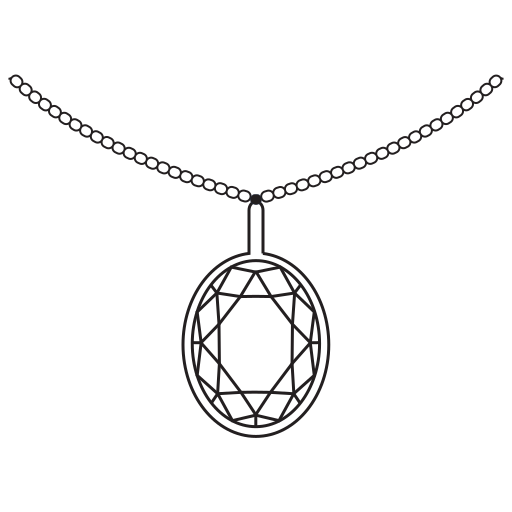
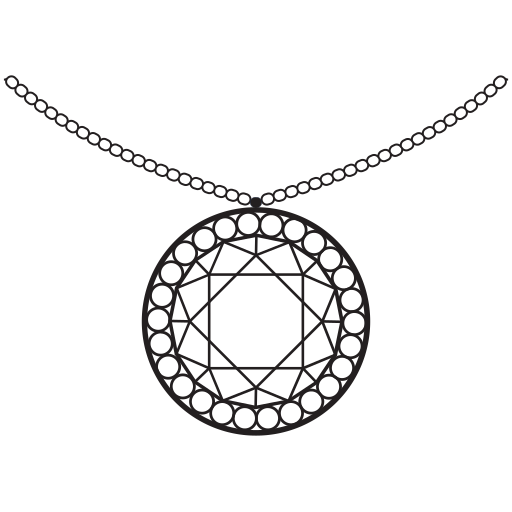
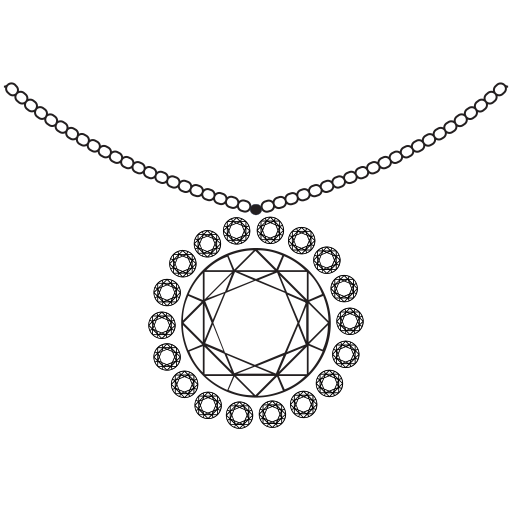
This shape in itself has a unique design, but there are different settings available which can enhance the beauty of a kite shape diamond engagement ring. The choice of setting is vital to determine the vibe of the ring. Let’s talk about the different settings a kite lab diamond can be placed in:
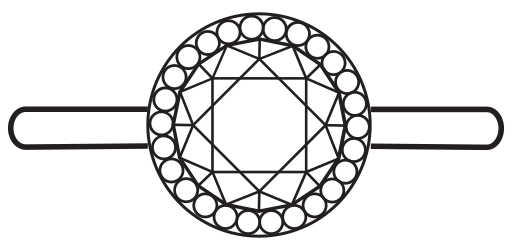
- Halo Setting
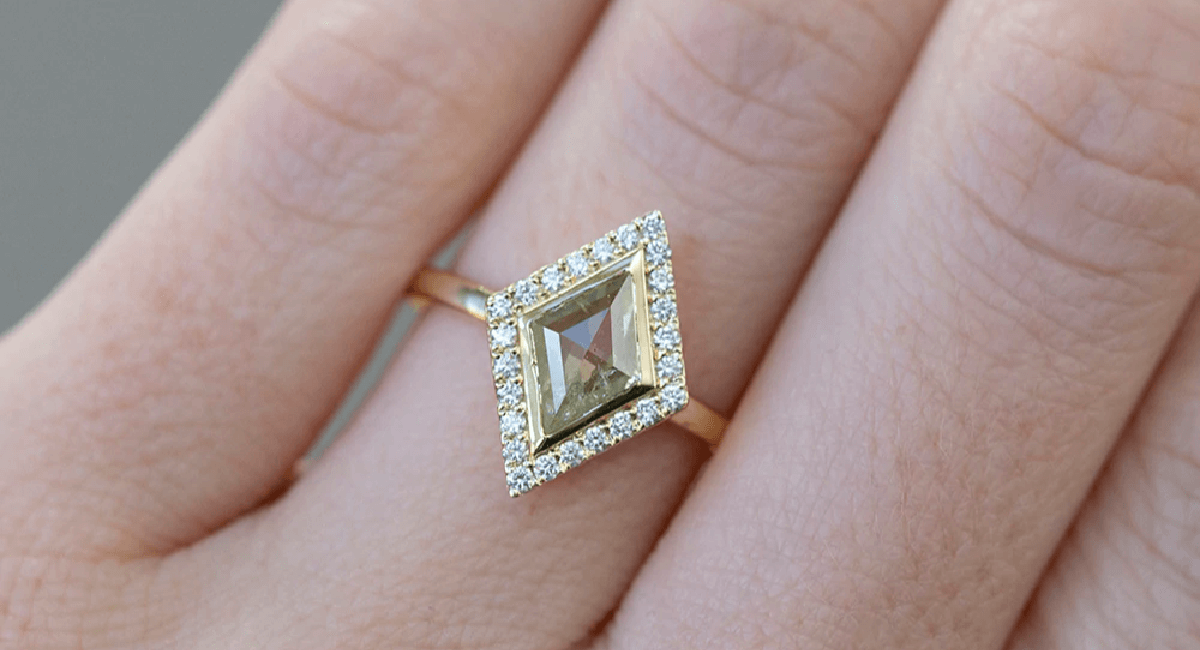
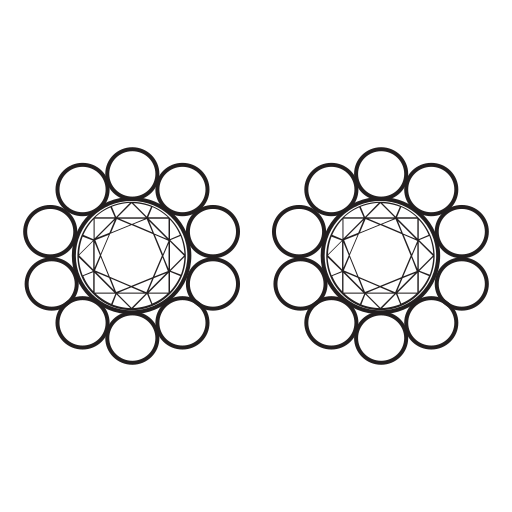
A ring type known as a halo setting has a central stone encircled by several side stones. Regarding the halo effect in a kite-shaped diamond, a single layer of extra stones on the halo setting can increase the appearance of the main diamond’s size by up to a half carat.
It provides a less expensive alternative to a solitaire setting where the item’s total carat weight (CTTW) is contained in a single diamond since it divides the CTTW of the piece across many jewels.
The single, double, and triple halo effects are only a few of the variations available within the halo effect. In a single halo ring setting, a kite-shaped diamond will be encircled by one layer of stones.
Two layers of jewels surround the center diamond in a double halo, comparable to a single halo. The triple halo effect goes the same. When choosing a type of halo effect for your kite cut diamond ring, you must first decide if you want the jewel levels to complement or contrast one another.
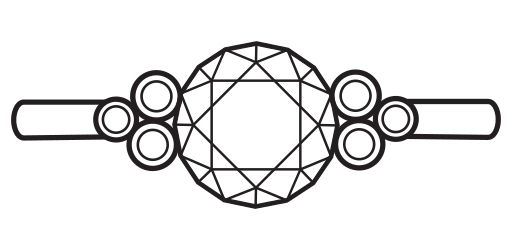
- Pave Setting
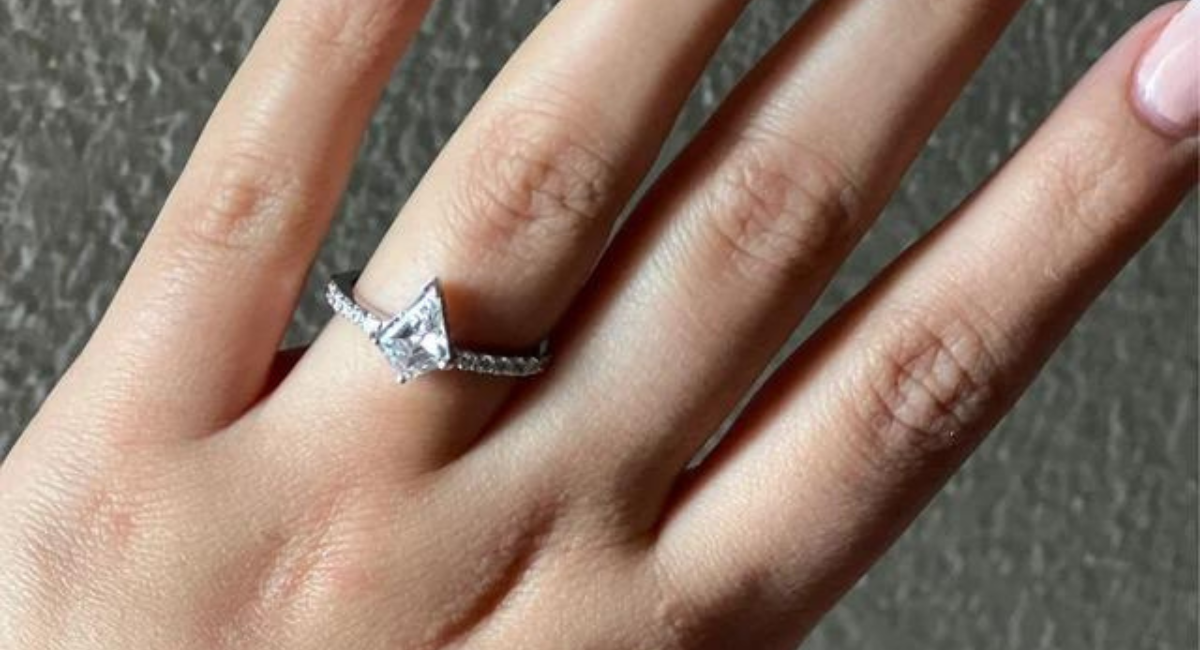
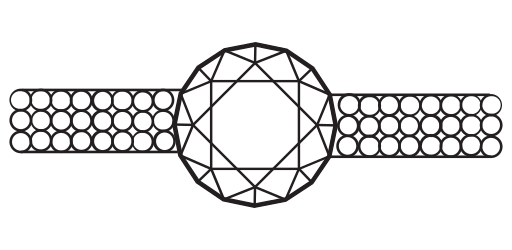
In a pave setting, small diamonds or gemstones are implanted into the base or circle of a ring and secured by tiny hooks or beads, giving the impression of a continuous line of sparkling. The stones will be positioned so tightly together that the metal below them won’t be visible.
This setting’s ultimate objective is to give the impression that glittering, freestanding stones are covering the whole surface of the ring. Talking about the pave setting in a kite cut diamond ring, if you think your ring could ever need to be resized, the best option is a semi-pave band rather than a complete one.
Diamonds can be placed in rows on a broader band, a thinner, more delicate band, a split shank, or even a crisscross pattern. Whatever pave you select will provide a field of glitter that is amplified.
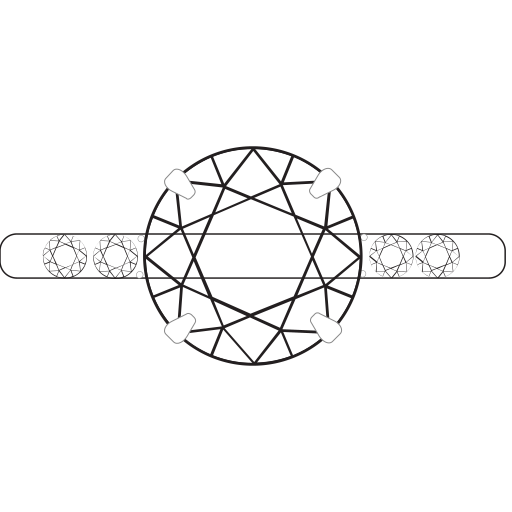
- Prong Setting
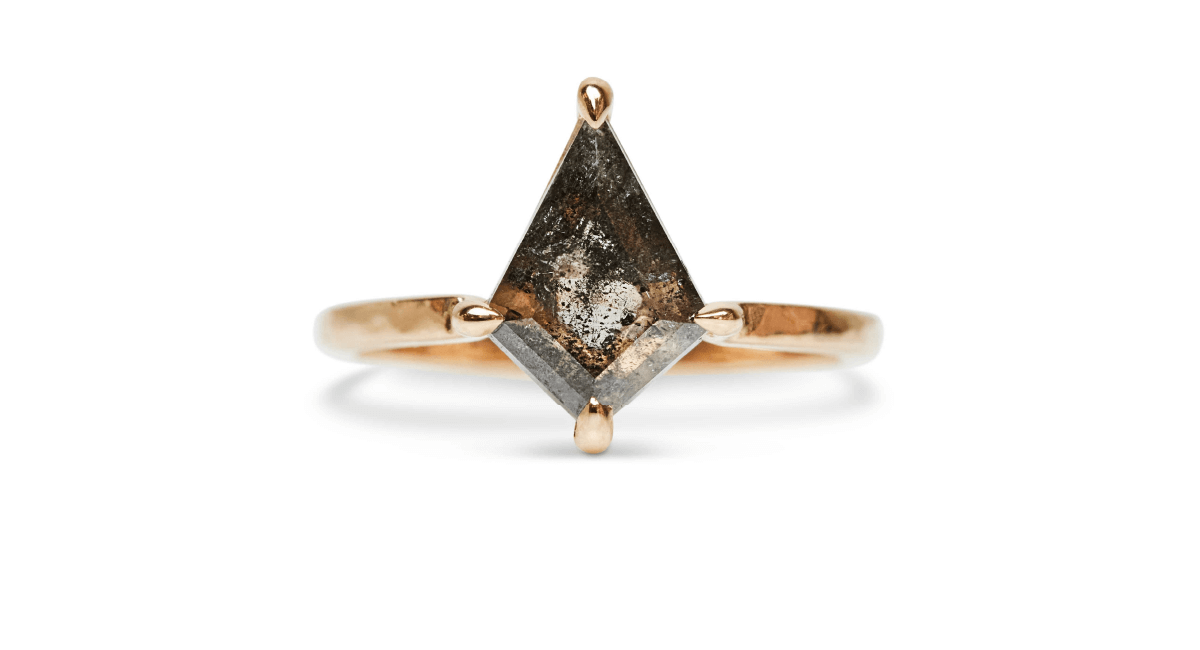
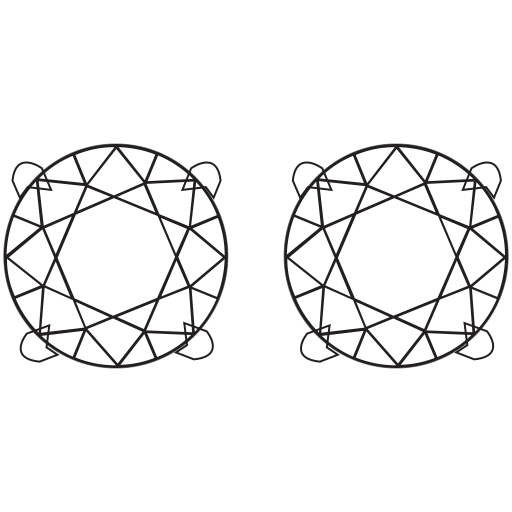
A prong setting secures the diamond while letting light easily travel through metal prongs that are used to keep it aloft. There are two alternatives for the number of prongs in a kite-shaped diamond ring: 4 or 6. The prongs can be flat, rounded, pointy, or v-shaped. Your gorgeous kite cut diamond’s characteristics can be enhanced by using prong settings.
The diamond’s fire and brightness are increased by the prongs’ large openings for light. On the other hand, you don’t want prongs that are too big or thick since they would obscure the center’s lovely kite form. In a perfect world, you would strike a balance between prongs that securely hold the diamond while yet allowing it to take center stage.
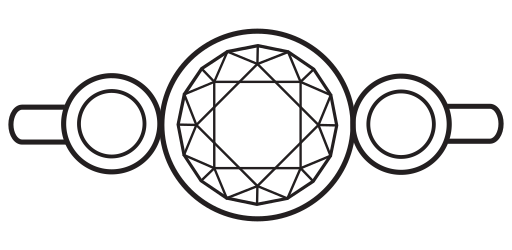
- Bezel Setting
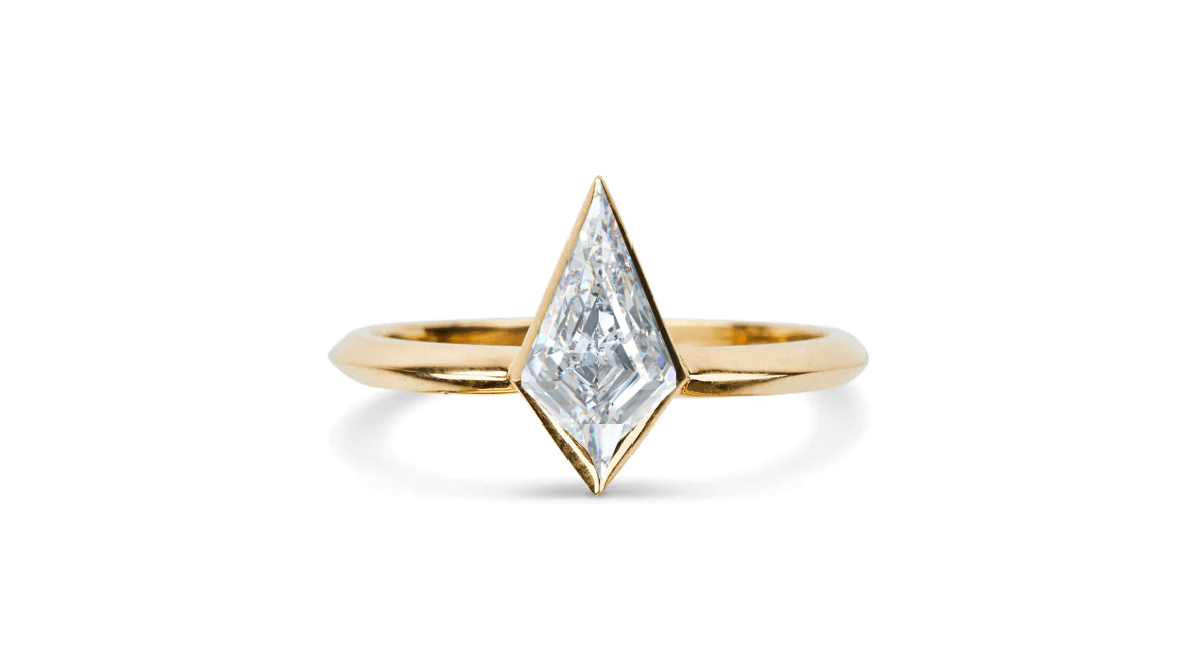
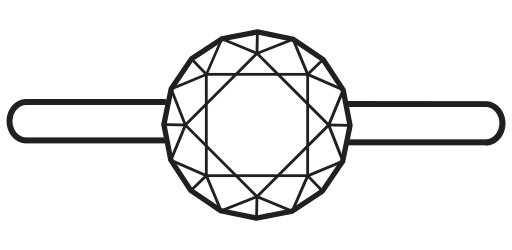
It is referred to as a bezel setting when the diamond or gemstone is encircled by an arc with a thin metal rim.
The gem is held in place by a metal collar that is formed around it. In addition to being useful, this setting gives the jewelry piece a touch of elegance.
There are three bezel setting styles available for kite cut diamonds: complete, partial, or ornamental.
For a kite diamond, the extra metal creates a streamlined form that looks good and goes well with the kite’s central shape. The bezel offers outstanding protection, even though it could lessen brilliance.
Light from the sides cannot enter the diamond since the bezel setting surrounds the gem’s periphery. Bezel rings might cost more than other settings due to the weight of the metal and the difficulties of making the setting.
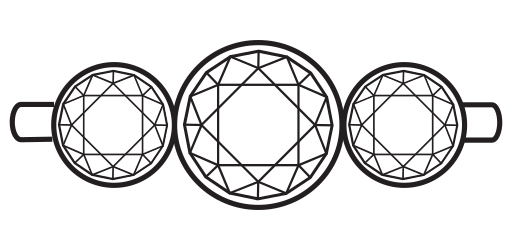
- Three-Stone Setting
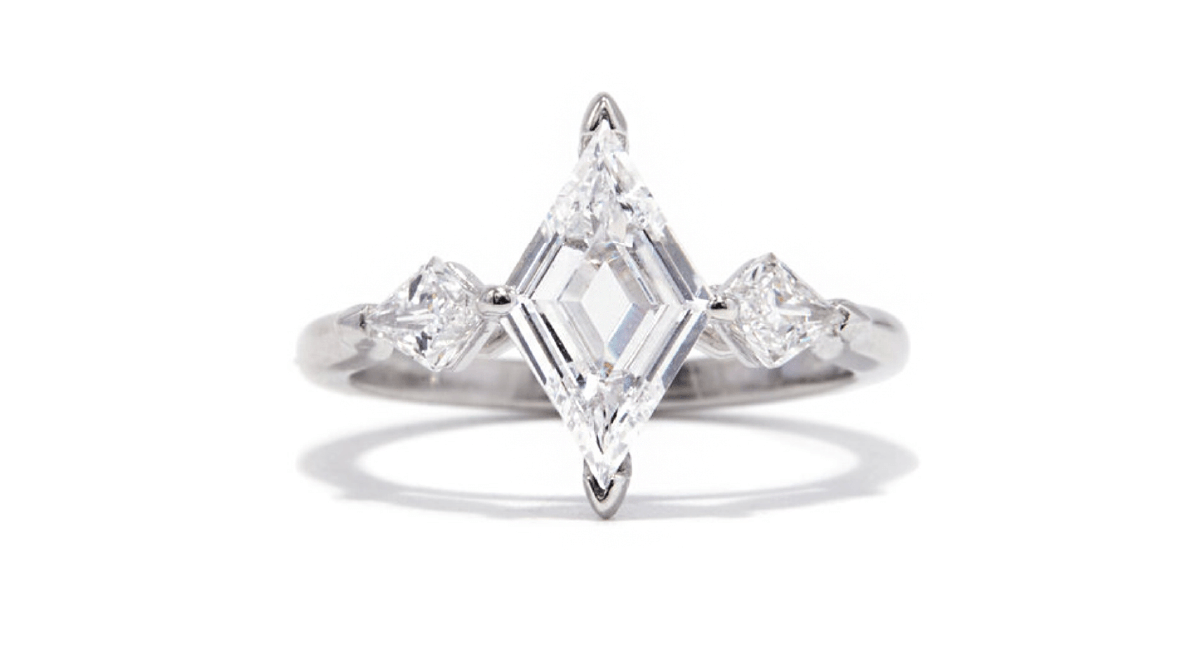
The three-stone setting, also known as the trilogy ring setting, is a well-liked option for a variety of events, particularly when purchasing engagement and anniversary rings.
As you have undoubtedly guessed, there are three diamonds arranged side by side in this setting. As the three gemstones or diamonds stand for the kid and the parents, couples frequently purchase them for the birth of their first child.
In essence, a three-stone kite cut diamond ring will just have three diamonds set one after the other in the center, giving the band this name.
The three stones are frequently seen as a symbol of the past, present, and future, and this arrangement is considered romantic because of its eternal appeal. There is no doubt that the three-stone setting has exquisite symbolism, but how you choose to interpret it is all up to you.
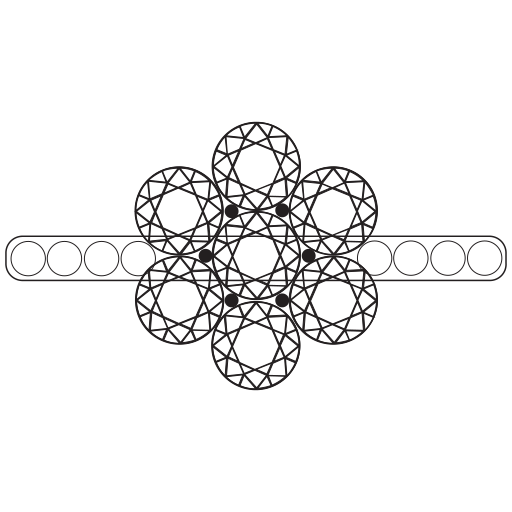
- Sunburst Setting
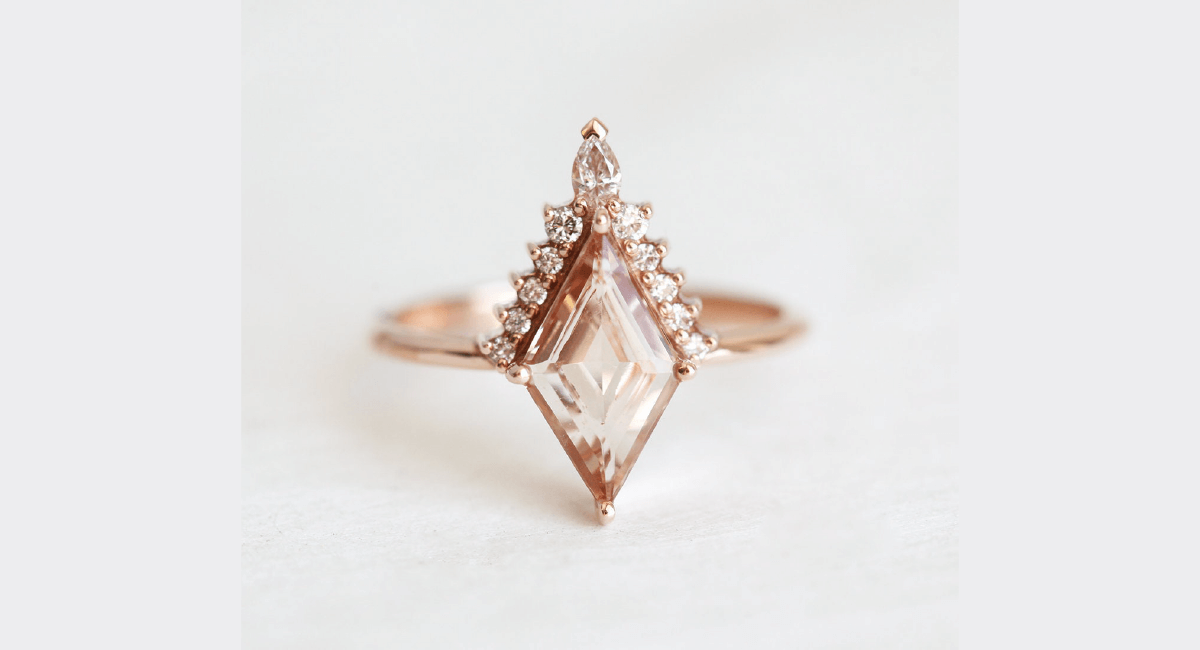
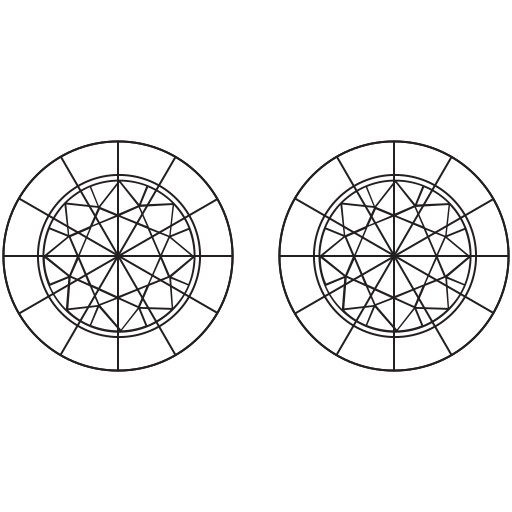
Smaller diamonds are arranged in a sunburst pattern so they look like one bigger diamond. A huge center stone or a collection of stones of different sizes can be found in a sunburst ring.
In a sunburst kite diamond ring, the diamonds frequently take the form of an original pattern, like a flower or starburst, or a geometric shape like a square.
Additionally, this setting looks wonderful with a kite shaped diamond. These rings often cost less than solitaire rings since they don’t include as large of a diamond. The price of a ring is influenced by the precious metal, diamond grade, and carat weight.
Best Jewelry for Kite Cut Diamonds
One of the greatest advantages of kite cut diamonds is their versatility. Their unusual shape allows designers to create stunning jewelry that cannot be achieved with more conventional cuts.
Kite Cut Engagement Rings
Kite cut diamonds are becoming increasingly popular in modern engagement rings. Their geometric shape creates a bold statement while maintaining elegance and sophistication.
Wedding Bands
Kite diamonds can be incorporated into wedding bands as accent stones or arranged in unique patterns for a contemporary appearance.
Pendant Necklaces
The elongated silhouette of a kite cut diamond makes it an excellent choice for pendants, where the shape can be fully appreciated.
Earrings
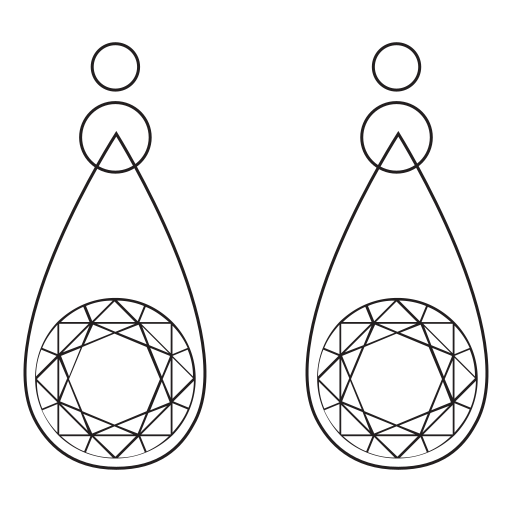
Matching kite cut diamonds create striking stud earrings and elegant drop earrings.
Art Deco Jewelry
Because of their geometric appearance, kite cut diamonds are particularly well suited for Art Deco-inspired designs that emphasize symmetry and architectural beauty.
Top Kite Cut Diamond Ring Settings
The setting you choose plays a major role in both the appearance and protection of your kite cut diamond.
1. Halo Setting
A halo setting surrounds the center kite cut diamond with a circle of smaller diamonds, creating additional sparkle and visual impact.
Benefits include:
- Makes the center diamond appear larger
- Adds brilliance
- Enhances overall ring presence
- Offers vintage-inspired elegance
A halo setting is an excellent option for buyers seeking maximum sparkle.
2. Pavé Setting
A pavé setting features small diamonds embedded into the band, creating a continuous surface of brilliance.
Benefits include:
- Adds extra sparkle
- Creates a luxurious appearance
- Complements the geometric shape of the center stone
- Works well with both thin and wide bands
A pavé band can dramatically enhance the beauty of a kite cut engagement ring.
3. Prong Setting
The prong setting remains one of the most popular choices for kite cut diamonds.
Benefits include:
- Maximizes light exposure
- Increases brilliance
- Highlights the diamond’s shape
- Provides a classic appearance
V-shaped prongs are often recommended to protect the pointed corners of kite cut diamonds.
4. Bezel Setting
In a bezel setting, a thin metal rim surrounds the diamond and secures it in place.
Benefits include:
- Superior protection
- Modern appearance
- Excellent durability
- Ideal for active lifestyles
Although bezel settings may slightly reduce light entry, they offer exceptional security for the diamond’s pointed edges.
5. Three-Stone Setting
A three-stone setting features a center kite cut diamond accompanied by two side stones.
Traditionally, the three stones symbolize:
- Past
- Present
- Future
This setting offers both sentimental meaning and visual balance.
6. Sunburst Setting
A sunburst setting uses multiple smaller diamonds arranged around the center stone to create a dramatic radiating effect.
Benefits include:
- Unique artistic appearance
- Exceptional visual impact
- Increased sparkle
- Distinctive custom design
This setting is ideal for buyers seeking a truly unconventional engagement ring.
Find Your Perfect Kite Cut Diamond
Whether you’re designing a custom engagement ring, searching for a unique gift, or expanding your jewelry collection, a kite cut diamond offers a remarkable combination of individuality and elegance.
Its geometric silhouette, artistic appeal, and growing popularity make it one of the most exciting diamond shapes available today.
Lab grown kite cut diamonds provide all the beauty of natural diamonds while offering greater affordability, sustainability, and customization options.
Explore our collection of premium lab grown kite cut diamonds and discover a shape that perfectly reflects your personal style.
Conclusion
Kite cut diamonds are among the most distinctive and creative diamond shapes available. Their elongated geometric silhouette, unique faceting patterns, and versatility make them an exceptional choice for modern jewelry.
Whether used in engagement rings, earrings, pendants, or custom Art Deco-inspired pieces, kite cut diamonds offer a sophisticated alternative to traditional diamond shapes.
For buyers seeking something truly memorable, a lab grown kite cut diamond combines timeless beauty, ethical sourcing, and outstanding value.
With the right setting and quality selection, a kite cut diamond can become a stunning centerpiece that will be admired for generations.
Frequently Asked Questions
What is a kite cut diamond?
A kite cut diamond is a uniquely shaped diamond featuring an elongated geometric silhouette that resembles a traditional kite. It is known for its modern appearance and artistic appeal.
Are kite cut diamonds rare?
Yes. Kite cut diamonds are considered relatively rare because they are less commonly produced than traditional shapes such as round, oval, or princess cut diamonds.
Do kite cut diamonds sparkle?
Yes, kite cut diamonds can sparkle beautifully, especially when cut with brilliant-style faceting. However, they typically produce a different type of sparkle than round brilliant diamonds.
Are kite cut diamonds suitable for engagement rings?
Absolutely. Their distinctive appearance makes them an excellent choice for buyers looking for a unique and memorable engagement ring.
Do kite cut diamonds look larger than other diamonds?
Because of their elongated proportions, kite cut diamonds often appear larger than other diamond shapes of the same carat weight.
What is the best setting for a kite cut diamond?
Popular settings include halo, pavé, bezel, prong, three-stone, and sunburst settings. Bezel and V-prong settings offer the best protection for the pointed corners.
Are lab grown kite diamonds real diamonds?
Yes. Lab grown kite diamonds are real diamonds with the same physical, chemical, and optical properties as mined diamonds.
What clarity grade is best for a kite cut diamond?
VS1, VS2, and SI1 clarity grades typically provide the best balance between beauty and value.
What color grade should I choose?
For a bright and colorless appearance, D-F grades are ideal. G-H grades often provide excellent value while still appearing nearly colorless.
Why are kite cut diamonds becoming popular?
Their geometric beauty, uniqueness, Art Deco influence, and suitability for custom jewelry designs have made kite cut diamonds increasingly popular among modern buyers.
Related Diamond Guides
Continue learning about diamond quality and pricing with these helpful resources:
These guides can help you compare clarity grades, understand diamond value, and choose the best diamond for your budget.