


Flawless Diamonds: The Complete Guide to FL Clarity, Price, Value, and Buying Tips (2026)

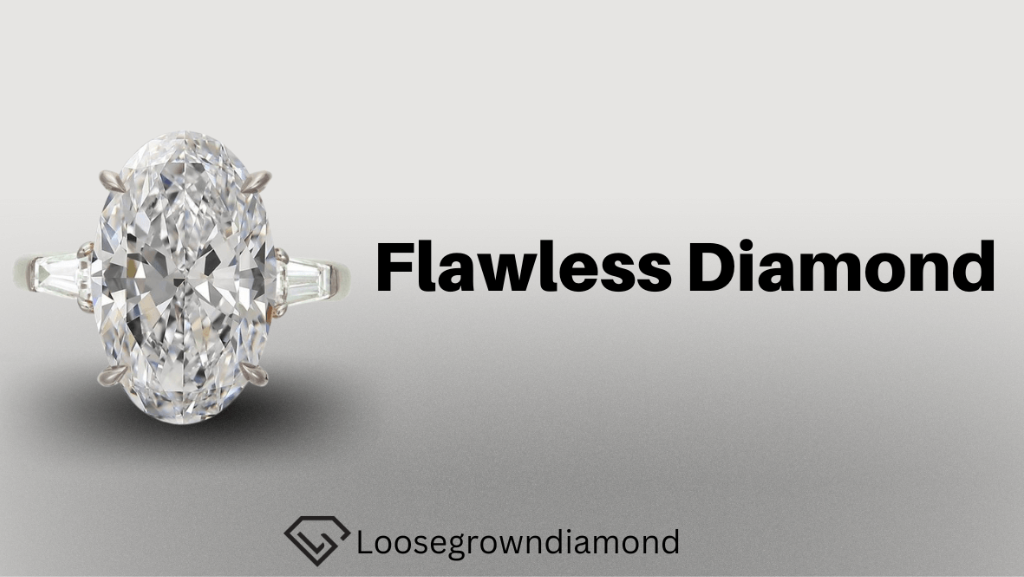
What Is a Flawless Diamond?
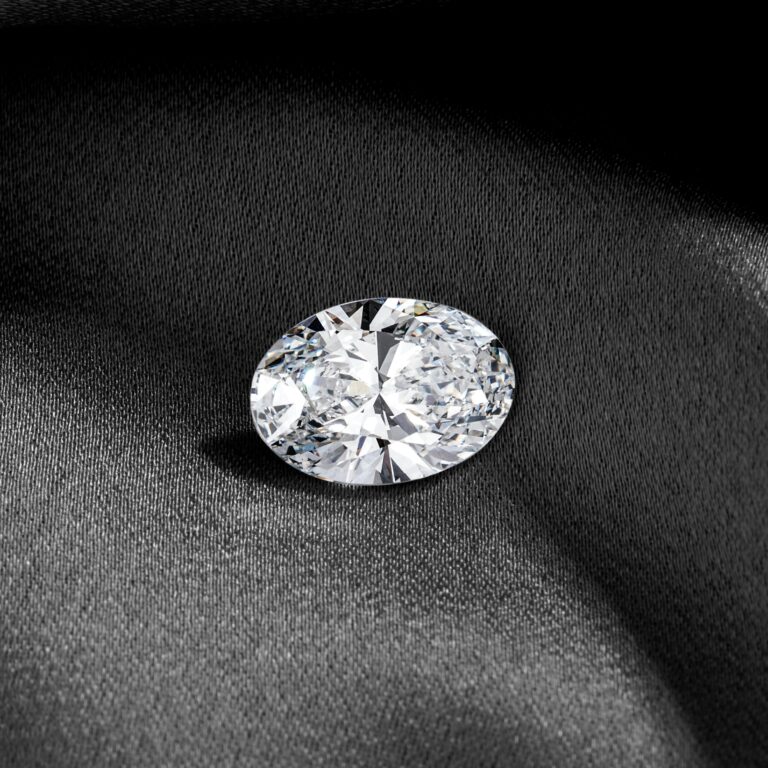
A Flawless (FL) diamond is the highest clarity grade awarded by the Gemological Institute of America (GIA). Under 10× magnification, an FL diamond shows no internal inclusions and no external blemishes, making it one of the rarest diamonds in the world.
Less than 1% of all gem-quality diamonds receive the Flawless clarity grade. Because of their exceptional rarity, FL diamonds command premium prices and are often sought after by collectors and buyers looking for the highest level of diamond perfection.
However, for most consumers, a Flawless diamond may not always represent the best value. Diamonds with slightly lower clarity grades, such as Internally Flawless (IF) or VVS1, often appear identical to the naked eye while costing significantly less.
In this guide, you’ll learn everything you need to know about Flawless diamonds, including how they are graded, how much they cost, whether they are worth buying, and how they compare with other clarity grades.
Table of Contents
- What Is a Flawless Diamond?
- How Rare Are Flawless Diamonds?
- How Are Flawless Diamonds Graded?
- Characteristics of FL Diamonds
- Why Are Flawless Diamonds So Expensive?
- Flawless Diamond Price Guide
- FL vs IF Diamonds
- Should You Buy a Flawless Diamond?
- How to Choose the Right FL Diamond
- FAQs
What Is a Flawless Diamond?
A Flawless (FL) diamond represents the highest clarity grade in the GIA Diamond Clarity Scale. To earn this prestigious grade, a diamond must show no inclusions and no blemishes when examined by a trained grader under 10× magnification.
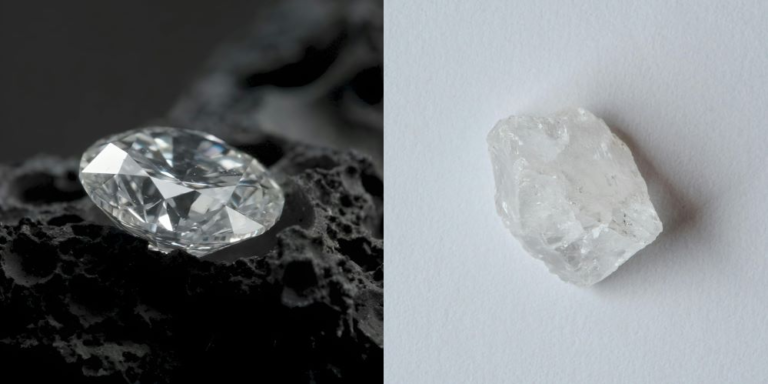
Many people assume that a Flawless diamond is literally perfect. While it is the closest thing to perfection in gemology, this isn’t entirely true. Every natural diamond forms under intense heat and pressure deep within the Earth, and microscopic growth characteristics almost always develop during that process.
A diamond is considered Flawless because no imperfections are visible at the standard grading magnification, not because it is absolutely free from every microscopic characteristic.
This distinction is important because some extremely tiny features may only become visible under much higher magnification, such as 60× or 100× microscopes, which are not used for official clarity grading.
For everyday wear, however, an FL diamond appears exceptionally clean and brilliant, making it the benchmark for diamond clarity.
How Rare Are Flawless Diamonds?
Flawless diamonds are among the rarest gemstones available on today’s market.
According to industry estimates, less than 1% of gem-quality diamonds receive the FL clarity grade. The vast majority of diamonds contain at least one microscopic inclusion or surface blemish, preventing them from achieving this elite classification.
Several factors contribute to their rarity:
- Natural diamonds form under extreme geological conditions, making completely inclusion-free crystals exceptionally uncommon.
- Even if a rough diamond begins with extraordinary clarity, the cutting and polishing process can introduce tiny surface imperfections.
- Professional grading standards are extremely strict, meaning even a minute polish mark can lower a diamond from FL to IF.
Because so few diamonds satisfy every grading requirement, Flawless diamonds are highly desirable among collectors, investors, and luxury jewelry buyers.
Their rarity becomes even more noticeable as carat weight increases. While small FL diamonds can occasionally be found, diamonds larger than 2 carats with Flawless clarity become exponentially rarer, causing prices to rise dramatically.
How Are Flawless Diamonds Graded?
Diamond clarity is evaluated by trained gemologists using internationally recognized grading standards established by organizations such as GIA (Gemological Institute of America) and IGI (International Gemological Institute).
During grading, experts carefully inspect the diamond under 10× magnification, looking for two categories of characteristics:
Internal Inclusions
These are naturally occurring features trapped inside the diamond during crystal formation, including:
- Crystal inclusions
- Feathers
- Clouds
- Needles
- Pinpoints
If even one inclusion is visible under 10× magnification, the diamond cannot receive an FL grade.
External Blemishes
Graders also inspect the surface for imperfections such as:
- Polish lines
- Surface graining
- Tiny scratches
- Natural marks
- Extra facets
To qualify as Flawless, the diamond must also be completely free from these surface blemishes.
Because the grading requirements are so demanding, even the slightest polishing mark may cause a diamond to be graded as Internally Flawless (IF) instead of Flawless (FL).
Characteristics of a Flawless Diamond
Flawless diamonds possess several unique qualities that distinguish them from all other clarity grades.
| Characteristic | Flawless Diamond |
|---|---|
| Clarity Grade | FL |
| Internal Inclusions | None under 10× magnification |
| Surface Blemishes | None under 10× magnification |
| Rarity | Less than 1% of diamonds |
| Visual Appearance | Perfectly clean |
| Best For | Collectors, luxury buyers, investment-quality jewelry |
Although clarity contributes to a diamond’s prestige, it is important to remember that clarity alone does not determine beauty.
A poorly cut FL diamond may appear less brilliant than an Excellent Cut VVS1 diamond. In fact, a diamond’s cut quality has the greatest influence on sparkle, fire, and overall visual performance.
For this reason, professional jewelers often recommend prioritizing cut quality first, followed by color and carat weight, before paying a premium for the highest clarity grade.
Why Are Flawless Diamonds So Expensive?
The primary reason Flawless diamonds command such high prices is simple: extreme scarcity.
Unlike many luxury products that can be manufactured in greater quantities, natural Flawless diamonds cannot be created on demand. Every FL diamond must naturally possess exceptional crystal purity before it is carefully cut by experienced craftsmen.
Several factors influence their premium pricing:
Exceptional Rarity
Only a tiny percentage of diamonds achieve the FL grade, making supply extremely limited.
Strict Grading Standards
A single microscopic blemish is enough to lower a diamond’s clarity grade. This rigorous grading process makes genuine FL diamonds highly exclusive.
Collector Demand
Collectors and luxury buyers often seek the highest possible quality regardless of price. As a result, FL diamonds remain highly desirable in the premium jewelry market.
Investment Appeal
Although diamonds should not be viewed as guaranteed financial investments, exceptionally rare FL diamonds—particularly those with high color grades and large carat weights—often retain stronger long-term desirability than more common clarity grades.
Flawless Diamond Price Guide
One of the most common questions buyers ask is, “How much does a flawless diamond cost?”
The answer depends on several factors, including carat weight, cut quality, color grade, certification, and whether the diamond is natural or lab grown. While clarity is an important pricing factor, it is only one part of the famous 4Cs.
In general, Flawless diamonds carry a significant premium because of their exceptional rarity. However, the price difference between FL and IF or VVS1 diamonds is often much larger than the visible difference.
Average Flawless Diamond Prices
The following table provides estimated price ranges for natural round brilliant FL diamonds with Excellent Cut and near-colorless to colorless grades.
| Carat Weight | Estimated Price Range |
|---|---|
| 0.50 ct | $2,000 – $5,000 |
| 1.00 ct | $8,000 – $18,000 |
| 2.00 ct | $35,000 – $90,000 |
| 3.00 ct | $90,000 – $250,000+ |
| 5.00 ct | $400,000+ |
Prices vary depending on market conditions, certification, fluorescence, cut quality, and color grade.
Large Flawless diamonds are exceptionally scarce, which is why prices increase exponentially rather than linearly. A 3-carat FL diamond is not simply three times the price of a 1-carat diamond—it can cost ten times more because of its rarity.
Why Are FL Diamonds More Expensive?
Several factors contribute to the premium price of Flawless diamonds:
- Extremely limited supply
- High demand from collectors and luxury buyers
- Strict grading standards
- Larger FL diamonds are exceptionally rare
- Premium certifications from GIA or IGI
While these factors justify the higher price, they don’t necessarily mean an FL diamond is the smartest purchase for every buyer.
Are Flawless Diamonds Worth the Money?
The answer depends on your priorities.
If your goal is to own one of the rarest diamonds available, an FL diamond is an outstanding choice. It represents the highest clarity grade and offers unmatched prestige.
However, if your priority is getting the most beautiful diamond for your budget, purchasing an FL diamond may not always be the best decision.
Advantages of Buying a Flawless Diamond
- Highest clarity grade available
- Exceptional rarity
- Strong prestige and collector appeal
- Premium resale desirability for rare, high-quality stones
- Ideal for luxury jewelry
Disadvantages
- Significantly more expensive
- Virtually identical appearance to IF or VVS diamonds without magnification
- Premium is paid primarily for rarity rather than visible beauty
Most jewelers agree that once a diamond reaches the eye-clean level, additional clarity improvements become increasingly difficult to notice.
Instead of paying thousands of dollars more for an FL grade, many buyers choose to invest that money in a larger carat weight or a higher-quality cut.
FL vs IF Diamonds
Many shoppers struggle to decide between Flawless (FL) and Internally Flawless (IF) diamonds because both represent the highest levels of diamond clarity.
The key difference is surprisingly small.
An FL diamond has no internal inclusions and no external blemishes visible under 10× magnification.
An IF diamond has no internal inclusions, but it may contain extremely minor surface blemishes that are only visible under magnification.
FL vs IF Comparison
| Feature | FL Diamond | IF Diamond |
|---|---|---|
| Internal Inclusions | None | None |
| Surface Blemishes | None | Very Minor |
| Naked-Eye Appearance | Identical | Identical |
| Rarity | Extremely Rare | Extremely Rare |
| Price | Higher | Slightly Lower |
| Best Choice | Collectors | Most Luxury Buyers |
For everyday wear, almost no one—including experienced jewelers—can distinguish an FL diamond from an IF diamond without specialized equipment.
Because of this, IF diamonds often provide better overall value.
FL vs VVS Diamonds
Another common comparison is between FL and VVS diamonds.
Unlike FL diamonds, Very Very Slightly Included (VVS) diamonds contain tiny inclusions that are extremely difficult to detect, even under magnification.
These inclusions are so small that they remain invisible without professional equipment.
FL vs VVS Comparison
| Feature | FL | VVS1 | VVS2 |
|---|---|---|---|
| Visible to Naked Eye | No | No | No |
| Rarity | Highest | Very Rare | Rare |
| Price | Highest | Lower | Lower |
| Overall Beauty | Excellent | Excellent | Excellent |
For engagement rings, VVS1 and VVS2 diamonds often offer the best balance between beauty and value.
Should You Buy a Flawless Diamond?
A Flawless diamond is an excellent purchase if:
- You want the highest possible clarity grade.
- You’re collecting rare diamonds.
- Your budget allows for luxury without compromise.
- You’re purchasing a significant heirloom piece.
However, you may want to consider IF or VVS diamonds if:
- You want the best value for your money.
- You prefer a larger carat weight.
- You prioritize sparkle over microscopic clarity.
- You’re shopping for an engagement ring within a fixed budget.
Remember that the cut quality has a much greater impact on brilliance than the difference between FL and VVS clarity.
For many buyers, choosing an Excellent Cut VVS1 diamond will result in a more impressive ring than selecting a smaller Flawless diamond.