

Diamond Certificate Guide

Learn how diamond certification works, compare GIA and IGI diamond grading reports, understand the 4Cs, read a diamond certificate, and verify your diamond report before you buy.
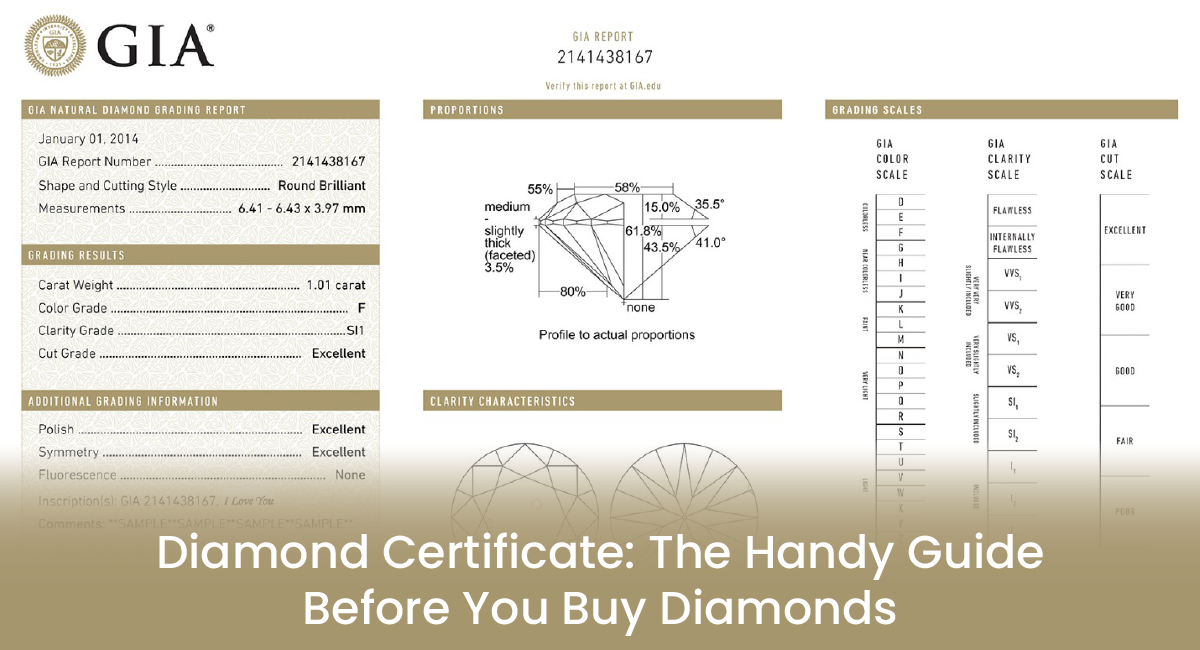
A diamond certificate, also known as a diamond grading report, provides an independent assessment of a diamond’s characteristics and quality. It commonly includes the 4Cs — carat, color, clarity and cut — along with measurements and other identifying information.
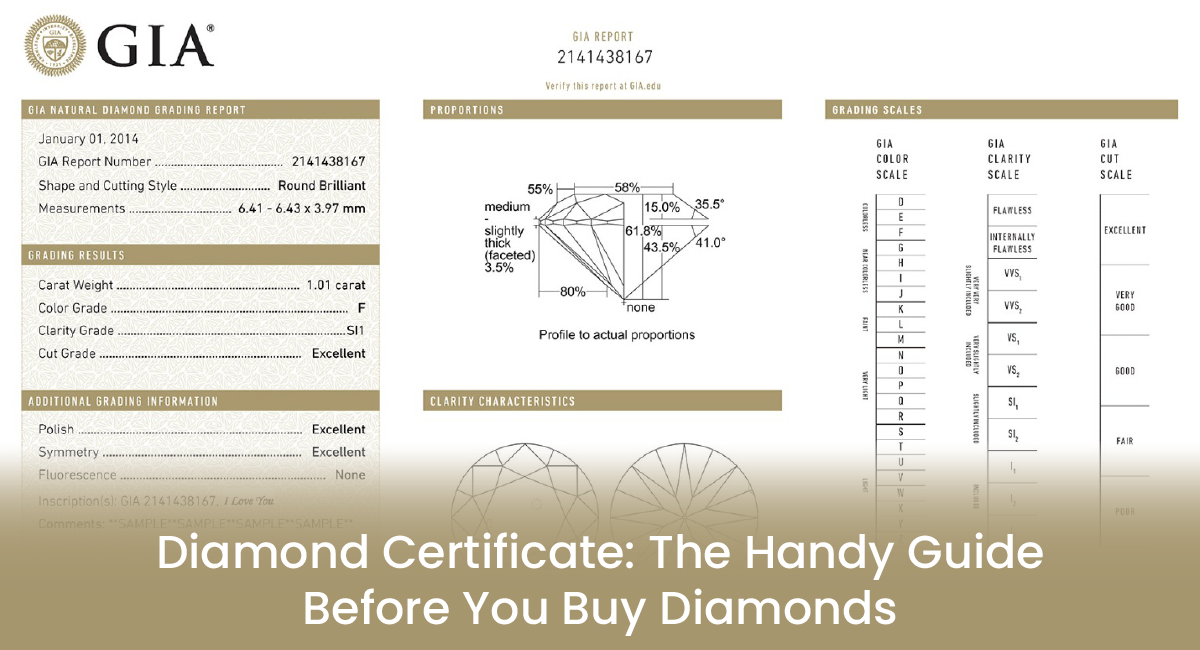
A diamond certificate, also known as a diamond grading report, verifies the quality, authenticity, and grading of a diamond based on the 4Cs.
What Is Diamond Certification?
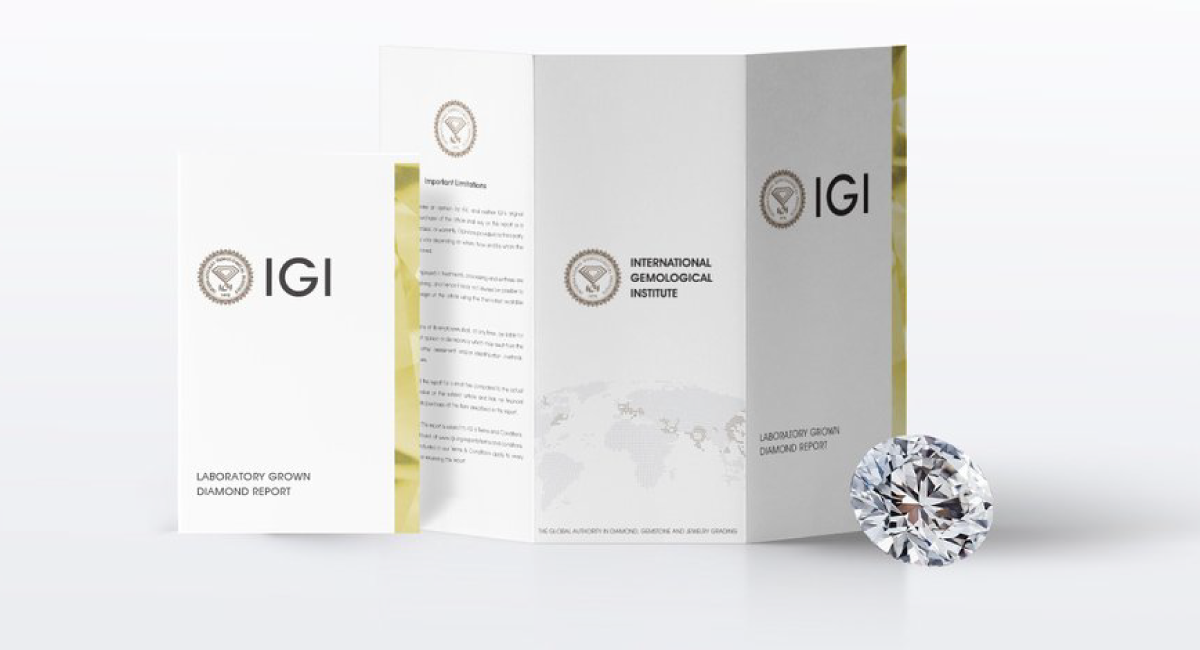
Diamond certification is the process of having a diamond evaluated by a professional gemological laboratory. The resulting grading report documents important characteristics of the diamond and provides a standardized reference for buyers.
Each diamond has its own characteristics, including carat weight, color, clarity, proportions and other identifying features. A grading report records these details so buyers can better understand and compare diamonds.
In addition to the 4Cs, diamond grading reports may include information about polish, symmetry, fluorescence, measurements, proportions, inclusions and laser inscription.
Why is Diamond Certification Important?
Diamond certification provides buyers with documented information about the diamond they are considering. It can make it easier to compare diamonds, understand their quality and verify the report through the issuing laboratory.
For lab-grown diamonds, a grading report can also identify the diamond as laboratory-grown and provide relevant grading information.
Types of Diamond Certification
Diamond grading laboratories evaluate diamonds based on standardized grading criteria, including the 4Cs—cut, color, clarity, and carat weight. Different laboratories may provide additional measurements and report details depending on their grading systems.
Major Laboratory
GIA
The Gemological Institute of America (GIA) is one of the world’s best-known gemological organizations. Its reports provide detailed information about a diamond’s characteristics and grading.
- 4Cs grading
- Measurements and proportions
- Polish and symmetry
- Fluorescence
- Diamond identification
Major Laboratory
IGI
The International Gemological Institute (IGI) provides grading reports for both natural and laboratory-grown diamonds and is widely used in the lab-grown diamond market.
- Lab-grown diamond reports
- 4Cs grading
- Measurements and proportions
- Polish and symmetry
- Laboratory-grown identification
Other Diamond Grading Laboratories
GCAL
Diamond grading, certification and verification.
HRD Antwerp
Diamond grading and identification services.
GSI
Diamond grading and identification reports.
AGS
Known for its historical cut grading system.
EGL
Historical diamond grading laboratories.
Diamond Grading Laboratories Comparison
The following table provides a general overview of commonly encountered diamond grading laboratories. Always review the actual report and verify it with the issuing laboratory.
| Laboratory | Full Name | Known For | Report Focus |
|---|---|---|---|
| GIA | Gemological Institute of America | Diamond Grading | 4Cs, measurements, proportions, polish, symmetry, fluorescence, and other identifying characteristics |
| IGI | International Gemological Institute | Lab-Grown Diamonds | 4Cs, measurements, proportions, polish, symmetry, fluorescence, and laboratory-grown diamond identification |
| HRD Antwerp | Hoge Raad voor Diamant | European Market | Diamond grading, 4Cs, measurements, proportions, and identifying characteristics |
| AGS | American Gem Society | Cut Grading | Known for its 0–9 grading scale and detailed approach to diamond cut quality |
| EGL | European Gemological Laboratory | Historical Grading | Historical diamond grading reports; buyers should verify the issuing laboratory and report details |
| GSI | Gemological Science International | Diamond Grading | Diamond grading reports covering 4Cs, measurements, and other identifying characteristics |
| GCAL | Gem Certification and Assurance Lab | Verification & Grading | Diamond grading, 4Cs, measurements, proportions, and additional verification features |
How to Read a Diamond Certificate
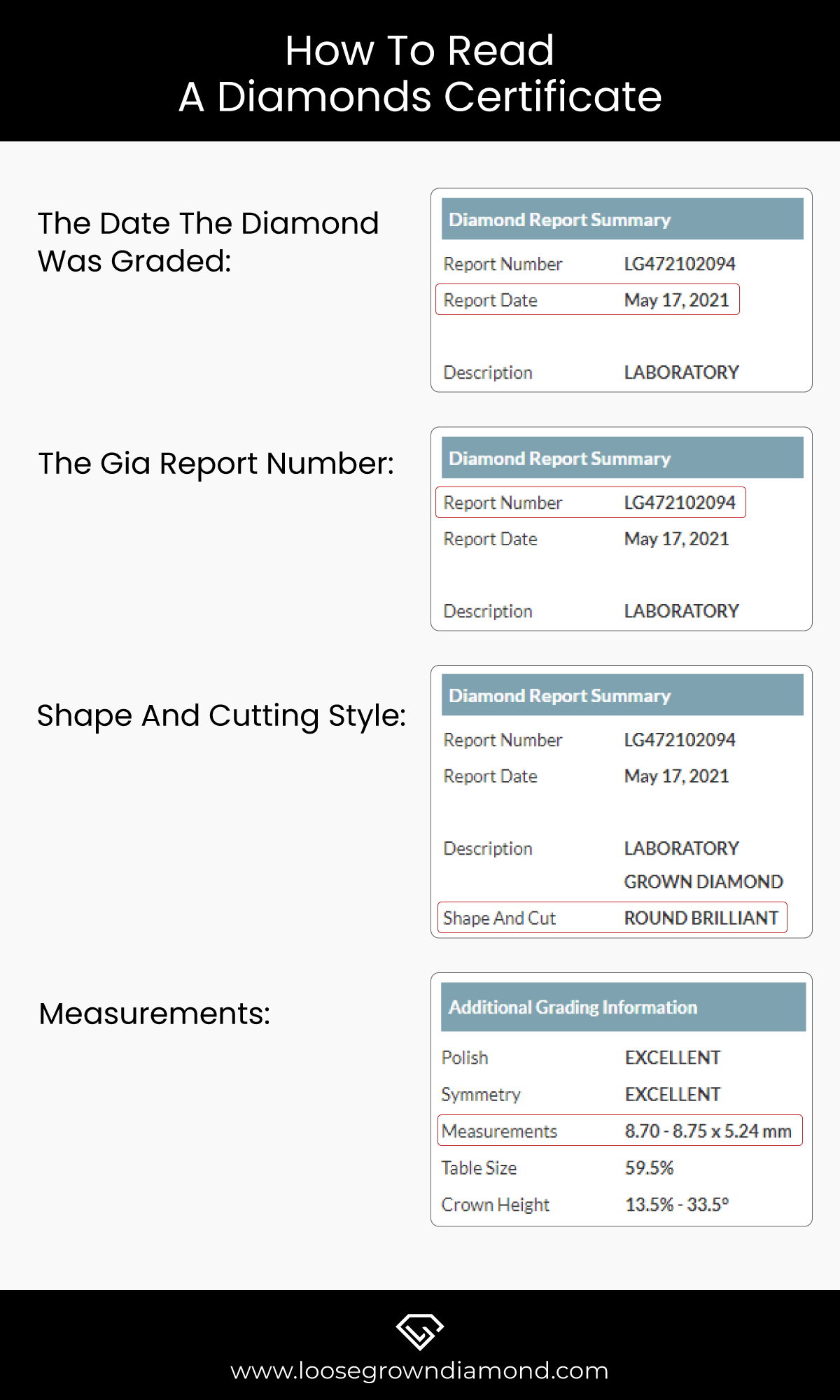
A diamond grading report contains detailed information about a diamond’s quality, measurements and identifying features. Understanding these sections can help buyers compare diamonds more confidently.
01
Report Number
A unique identification number used to locate and verify the report.
02
4Cs Grading
Carat weight, color, clarity and cut provide the foundation of diamond grading.
03
Diamond Dimensions
Measurements such as length, width and depth describe the diamond’s physical dimensions.
04
Table & Depth
Proportion measurements can influence how light interacts with the diamond.
05
Polish & Symmetry
These grades describe the finish and symmetry of the diamond.
06
Girdle & Culet
Report details may include girdle thickness and culet characteristics.
07
Diamond Plot
A diagram may show inclusions and blemishes used to help identify the diamond.
08
Fluorescence
Indicates how the diamond reacts to ultraviolet light.
09
Laser Inscription
Some diamonds have a microscopic report number inscribed on the girdle.
10
Comments
Additional information about treatments, growth method or characteristics may appear here.
How to Verify a Diamond Certificate
Verifying a diamond grading report is an important step before purchasing a certified diamond. Use the issuing laboratory’s official report verification service whenever available.
1
Find the Report Number
Locate the unique report number printed on the grading report.
2
Visit the Official Laboratory Website
Use the official GIA, IGI or other laboratory report verification service.
3
Enter the Report Number
Enter the report number exactly as shown on the document.
4
Compare the Details
Check the carat, shape, measurements, color, clarity and other report details.
What Affects Diamond Grading?
The four primary factors used to describe diamond quality are known as the 4Cs: carat, color, clarity and cut.
C
Carat
Refers to the diamond’s weight.
C
Color
Describes the degree of color present.
C
Clarity
Describes inclusions and blemishes.
C
Cut
Describes proportions, symmetry and finish.
Carat
Carat refers to the weight of a diamond. One carat equals 200 milligrams. Carat weight is one of the factors considered when evaluating diamond size and value.
The final appearance and price of a diamond also depend on characteristics such as cut, color, clarity, shape and certification.
Learn more about diamond carat weight in our Diamond Carat Guide
Color
Diamond color is commonly graded on a scale from D to Z. D represents the highest color grade on the traditional scale, while diamonds farther down the scale may display more noticeable body color.
Fluorescence may also be included on a diamond grading report. It describes how a diamond reacts under ultraviolet light.
Learn more in our Diamond Color Guide
Clarity
Diamond clarity describes internal and external characteristics known as inclusions and blemishes. Professional graders examine diamonds under magnification when assigning clarity grades.
Learn more about clarity grades in our Diamond Clarity Guide.
Cut
Diamond clarity describes internal and external characteristics known as inclusions and blemishes. Professional graders examine diamonds under magnification when assigning clarity grades.
Learn more about clarity grades in our Diamond Cut Guide.
Are Lab Grown Diamonds Certified?
Yes. Laboratory-grown diamonds can receive grading reports from major gemological laboratories such as IGI and GIA. These reports provide grading information and identify the diamond as laboratory-grown.
When buying a lab-grown diamond, buyers can review the report number, 4Cs, measurements, proportions and other identifying information before making a purchase.
What Should You Look for When Buying a Certified Diamond?
Why Buy a Certified Lab Grown Diamond?
A certified lab-grown diamond provides buyers with a documented grading reference. This can make it easier to compare diamonds and verify the characteristics listed by the grading laboratory.
Certification does not replace evaluating the actual diamond. Buyers should consider the complete combination of 4Cs, proportions, appearance, report information and price.
Frequently Asked Questions
What is the best diamond certification?
GIA and IGI are among the best-known laboratories. The most important step is to review the grading report and verify it through the issuing laboratory.
Do I need a diamond certificate when buying a diamond?
A grading report provides useful documentation of the diamond’s characteristics and can help buyers compare and verify a diamond.
Are lab-grown diamonds certified?
Yes. Lab-grown diamonds can be graded by major gemological laboratories such as GIA and IGI.
What is the difference between GIA and IGI certification?
GIA and IGI use their own grading systems and report formats. Buyers should compare the actual report, diamond characteristics and overall value.
How can I check a diamond certificate?
Enter the report number on the official website of the issuing laboratory and compare the online report with the physical diamond.
What is a diamond grading report?
A diamond grading report is a document issued by a gemological laboratory that records a diamond’s characteristics and grading information.
Find Certified Diamonds
Browse our collection of certified lab-grown diamonds with trusted grading reports. View Diamonds
Related Tools
Diamond certification directly affects diamond value. Use our Diamond Price Calculator to estimate a lab grown diamond price based on carat, color, clarity, cut, and certification.