

Lab Grown Diamond Clarity Guide: Understanding Diamond Clarity Grades

Diamond clarity is one of the most important factors to consider when choosing a lab grown diamond.
Clarity affects a diamond’s appearance, rarity, and value by determining the number, size, and visibility of internal and external characteristics known as inclusions and blemishes.
This complete lab grown diamond clarity guide explains diamond clarity grades, the clarity scale, and how to choose the best clarity for your engagement ring.
Whether you are comparing VVS, VS, or SI diamonds, understanding clarity will help you make a smarter diamond purchase.
What Is Diamond Clarity?
Diamond clarity refers to the presence or absence of internal inclusions and external blemishes within a diamond.
These characteristics can occur during the diamond formation process and may affect the diamond’s transparency and overall appearance.
A diamond with fewer visible imperfections generally receives a higher clarity grade and is considered more rare.
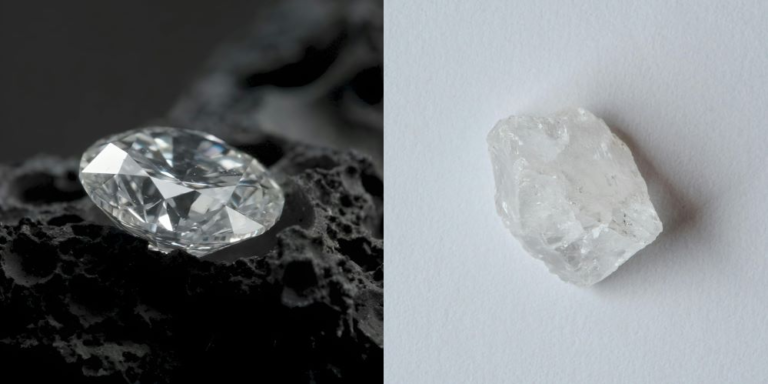
Lab grown diamonds are real diamonds created in controlled laboratory environments using advanced technologies such as Chemical Vapor Deposition (CVD) and High Pressure High Temperature (HPHT).
Just like natural diamonds, lab grown diamonds are graded based on the 4Cs:
- Cut
- Color
- Clarity
- Carat
Why Does Diamond Clarity Matter?
Diamond clarity plays an important role in determining:
Appearance
Higher clarity diamonds usually have fewer visible inclusions, allowing more light to pass through the stone.
Value
Diamonds with higher clarity grades are generally more expensive because they are rarer.
Buying Decision
Choosing the right clarity helps buyers balance beauty, quality, and budget.
However, the highest clarity grade is not always necessary. Many inclusions cannot be seen without professional magnification.
For most buyers, selecting a visually clean diamond provides the best value.
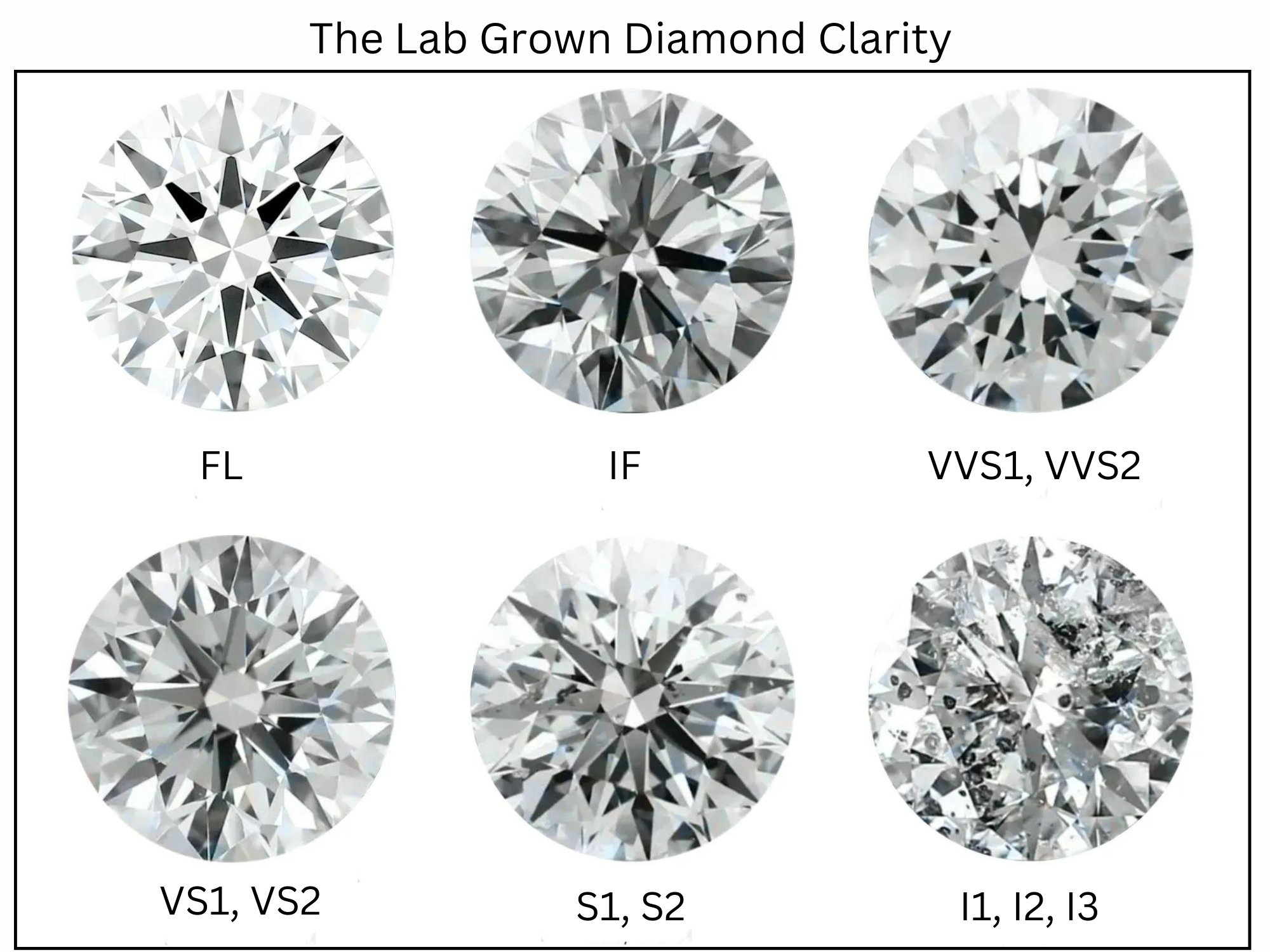
Lab Grown Diamond Clarity Scale Chart
Lab grown diamonds use the same clarity grading system as natural diamonds.
| Clarity Grade | Description | Appearance | Best Choice |
|---|---|---|---|
| FL / IF | Flawless / Internally Flawless | No visible inclusions under 10x magnification | Luxury diamonds |
| VVS1 / VVS2 | Very Very Slightly Included | Extremely difficult to see inclusions | Premium buyers |
| VS1 / VS2 | Very Slightly Included | Minor inclusions, excellent value | Most buyers |
| SI1 / SI2 | Slightly Included | Visible under magnification | Budget-friendly options |
| I1-I3 | Included | Noticeable inclusions | Lower price range |
FL and IF Diamond Clarity: The Highest Grades
FL (Flawless) and IF (Internally Flawless) represent the highest clarity grades.
Characteristics:
- No visible inclusions under 10x magnification
- Extremely rare
- Premium pricing
These clarity grades are ideal for buyers who want the highest level of perfection.
Best for:
- Luxury engagement rings
- High-end jewelry
- Collectors
However, the visual difference between IF and lower grades such as VVS is often difficult to notice without professional equipment.
VVS Diamond Clarity: Premium Appearance
VVS means Very Very Slightly Included.
VVS diamonds contain extremely small inclusions that are difficult for even experienced graders to detect under 10x magnification.
VVS clarity includes:
- VVS1
- VVS2
Advantages:
- Excellent visual appearance
- Very high clarity
- Premium quality
VVS diamonds are a popular choice for buyers who want a nearly flawless appearance without choosing the highest-priced clarity grades.
VS Diamond Clarity: The Best Value Choice
VS clarity is one of the most popular choices among diamond buyers because it provides an excellent balance between appearance and price.
VS stands for Very Slightly Included, meaning the diamond contains minor inclusions that are usually difficult to see without magnification.
VS clarity includes:
- VS1
- VS2
VS1 Diamond Clarity
VS1 diamonds have fewer and smaller inclusions compared with VS2 diamonds.
Characteristics:
- Very difficult to see inclusions under 10x magnification
- Excellent visual appearance
- Higher value than VVS diamonds
VS1 diamonds are a great option for buyers who want premium appearance without paying for the highest clarity grades.
VS2 Diamond Clarity
VS2 diamonds contain slightly more inclusions compared with VS1 diamonds.
However, many VS2 diamonds appear completely clean to the naked eye.
Advantages:
- Excellent balance between clarity and price
- Suitable for most engagement rings
- Allows buyers to spend more on carat size or cut quality
For many lab grown diamond buyers, VS2 offers one of the best value choices.
SI Diamond Clarity: Affordable Options
SI means Slightly Included.
SI diamonds include:
- SI1
- SI2
These diamonds contain more noticeable inclusions compared with VS diamonds.
However, the visibility of inclusions depends on:
- Diamond size
- Cut shape
- Inclusion location
- Type of inclusion
SI1 Diamond Clarity
SI1 diamonds often provide good value because many stones appear eye-clean.
Benefits:
- More affordable pricing
- Good appearance when selected carefully
- Suitable for budget-conscious buyers
SI2 Diamond Clarity
SI2 diamonds have more visible inclusions compared with SI1.
They can still be a suitable choice when:
- Budget is limited
- Diamond size is the priority
- The inclusions do not affect overall appearance
When buying SI diamonds, reviewing the diamond images and grading report is highly recommended.
How to Choose the Best Lab Grown Diamond Clarity?
The best clarity grade depends on your priorities, budget, and diamond size.
Best Overall Value: VS1 – VS2
For most buyers, VS clarity offers the ideal balance.
Benefits:
- Eye-clean appearance
- Excellent quality
- Better pricing than VVS and IF grades
Best Premium Choice: VVS1 – VVS2
Choose VVS clarity if you prefer:
- Exceptional purity
- Premium quality
- A higher clarity grade
Best Budget Choice: SI1
SI1 is a good option for buyers who want:
- Larger diamonds
- Lower prices
- Good visual appearance
Does Lab Grown Diamond Clarity Differ From Natural Diamonds?
Lab grown diamonds and natural diamonds are graded using the same clarity standards.
Professional laboratories evaluate both types of diamonds based on:
- Inclusion size
- Inclusion number
- Inclusion location
- Inclusion type
However, lab grown diamonds may contain different growth-related characteristics depending on the manufacturing method.
For example:
CVD Lab Grown Diamonds
CVD diamonds may show characteristics related to crystal growth patterns.
HPHT Lab Grown Diamonds
HPHT diamonds may have metallic inclusions or growth features caused by the high-pressure growth environment.
These characteristics do not mean the diamond is lower quality. They are simply part of the grading process.
Lab Grown Diamond Clarity and Certification
A diamond grading report is important when purchasing a lab grown diamond.
Professional laboratories evaluate diamonds based on the 4Cs:
- Cut
- Color
- Clarity
- Carat
Common grading laboratories include:
- International Gemological Institute (IGI)
- Gemological Institute of America (GIA)
- Gem Certification & Assurance Lab (GCAL)
A certification report provides important information about:
- Diamond quality
- Clarity grade
- Color grade
- Diamond characteristics
Always review the grading report before making a purchase.
Diamond Clarity vs Other 4C Factors
Diamond clarity is only one part of overall diamond quality.
The four major diamond factors include:
Cut
Cut determines how effectively a diamond reflects light and creates brilliance.
A well-cut diamond can appear more beautiful even with a slightly lower clarity grade.
Color
Color measures the amount of visible color in a diamond.
Many buyers balance clarity and color together to achieve the best appearance.
Carat
Carat affects diamond size and overall visual impact.
Choosing a slightly lower clarity grade may allow buyers to select a larger diamond.
Clarity
Clarity measures internal and external characteristics that affect transparency and appearance.
The best diamond choice is usually a balance between all four factors.
Final Recommendation: What Is the Best Lab Grown Diamond Clarity?
For most buyers, VS1 to VS2 clarity provides the best combination of beauty, quality, and value.
Recommended choices:
Choose VVS1-VVS2 if:
- You want premium clarity
- Budget is less important
- You prefer maximum purity
Choose VS1-VS2 if:
- You want the best overall value
- You want an eye-clean diamond
- You are buying an engagement ring
Choose SI1 if:
- You want a larger diamond within a budget
- You carefully select an eye-clean stone
The best lab grown diamond clarity is not always the highest grade. It is the clarity grade that provides the best appearance and value for your personal needs.
Frequently Asked Questions
What is lab grown diamond clarity?
Lab grown diamond clarity refers to the amount and visibility of inclusions and blemishes inside a laboratory-created diamond.
What is the best clarity for a lab grown diamond?
For most buyers, VS1 and VS2 clarity offer the best balance between appearance and price.
Is VVS clarity better than VS clarity?
Yes, VVS clarity has fewer inclusions than VS clarity. However, the visual difference is often difficult to see without magnification.
Is VS2 a good diamond clarity
Yes. VS2 is one of the most popular clarity grades because it provides excellent value and usually appears eye-clean.
Are lab grown diamonds graded the same as natural diamonds?
Yes. Lab grown diamonds use the same clarity grading system as natural diamonds.
Does clarity affect diamond sparkle?
Clarity can influence appearance, but diamond cut has the biggest impact on sparkle and brilliance.
Explore Certified Lab Grown Diamonds
Choosing the right clarity grade helps you find a diamond that matches your style and budget.